Rapid MVP Development

Something real in weeks, not quarters.

AI-augmented development has completely changed what a lean-startup budget can buy. Working prototypes and validated MVPs in weeks, delivered by a senior engineer.

The opportunity

The economics of MVP development just changed.

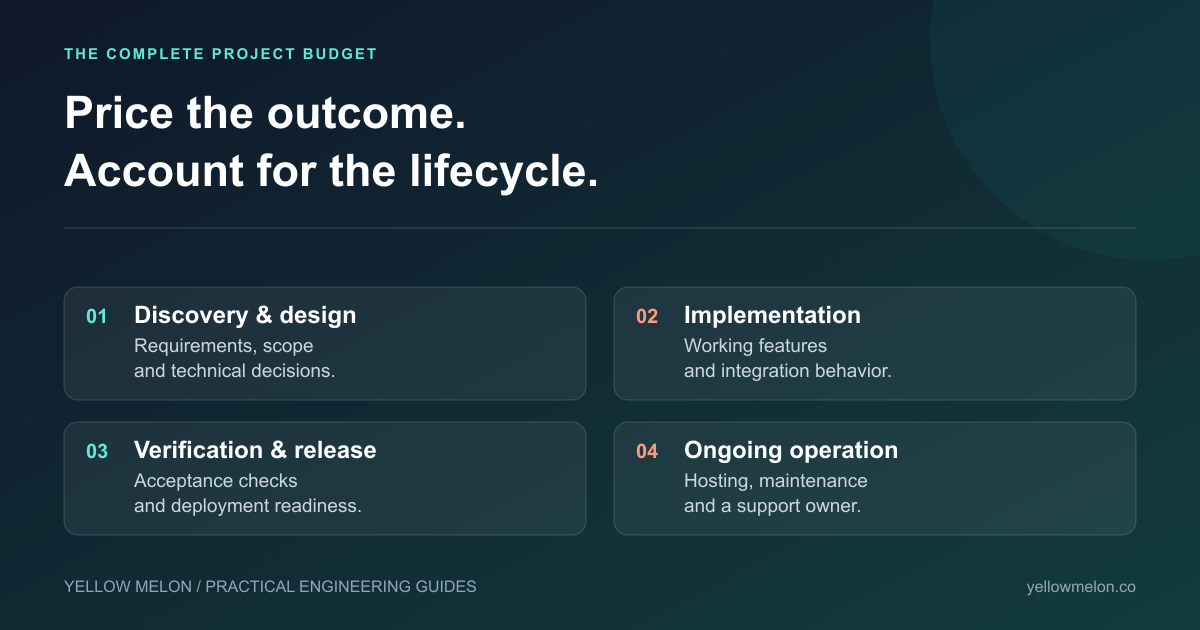
A useful MVP focuses on the assumptions you need to test. Budget and timeline depend on the scope, integrations and reliability requirements. Agreeing those early helps avoid building features that do not contribute to the first validation milestone.

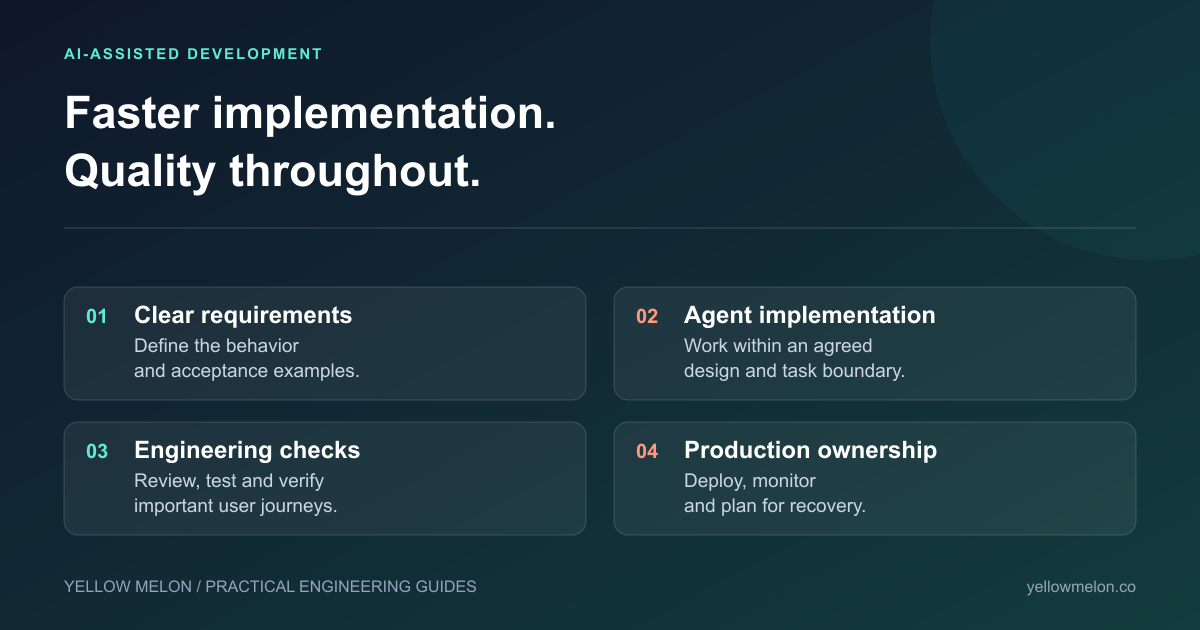
Agentic AI workflows have collapsed that trade-off. A senior engineer driving Claude, Cursor and a disciplined agent setup now delivers real, production-standard code at velocities that used to be impossible. The judgment is still senior — the execution is accelerated by AI, with the pace depending on scope, integrations and review requirements.

The result: US and Canadian startups can now afford to validate ideas in code rather than in slides — with a real chance of hitting product-market fit before the first round runs out.
How it works

A four-week shape (adjustable).

Week 0

Scope & design

Short kickoff, crisp scope, realistic success criteria. Cut ruthlessly — the purpose of an MVP is to learn, not to launch everything.

Week 1–3

Build

AI-augmented development on a modern stack (Next.js, TypeScript, Postgres). You see working software by end of week one, not end of quarter.

Week 3–4

Polish & ship

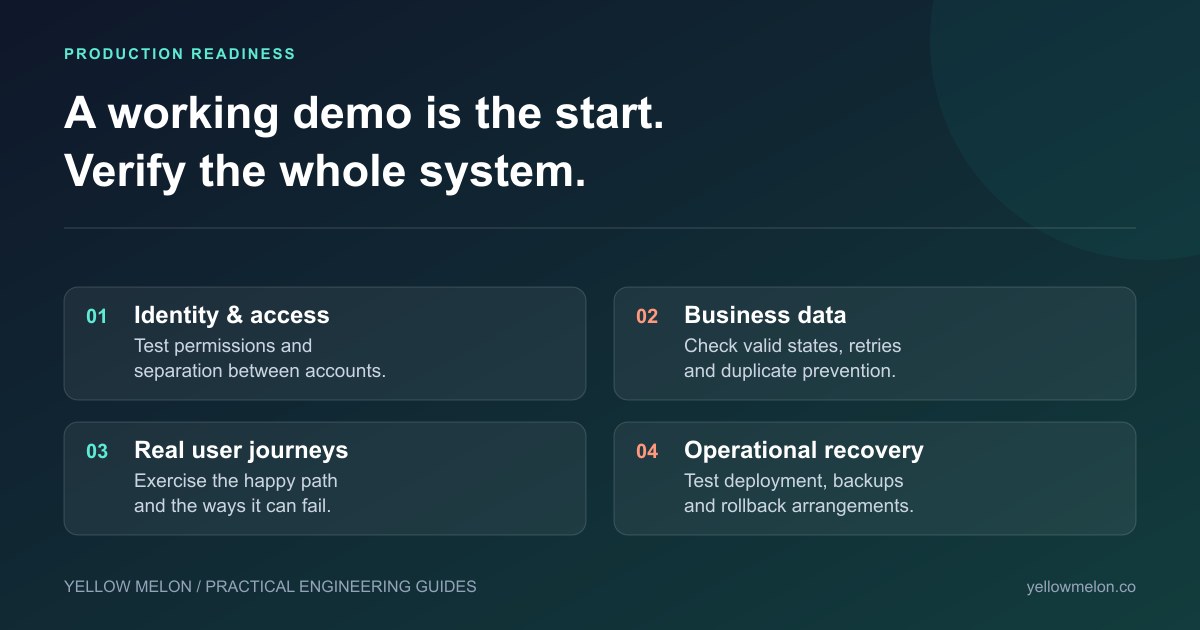
Auth, payments (if relevant), deployment, basic analytics. Production-grade even though the scope is deliberately minimal.

Ongoing

Learn & iterate

Real user feedback drives the next build-cycle. MVPs are a learning loop — I stay light so you can move.

Good fit

Ideal for founders and product teams who want to:

Validate a SaaS hypothesis in real code with real users
Get in front of customers or investors with working software
De-risk a later larger build by shipping the core thesis first
Modernise a manual internal process without committing to a full platform
Pilot an AI-augmented feature inside an existing product

If scope is bigger than a single MVP iteration, consider bespoke SaaS development.

Common questions

Frequently asked.

How is this different from a 'no-code' MVP?

No-code is fine for quick validation. But if your MVP hits product-market fit, you'll rebuild it in code anyway — usually painfully. I build in real code from day one, using AI to keep the velocity comparable to no-code.

What's a realistic price range?

Most rapid MVPs land in the US$12k–40k range depending on scope. I'll quote fixed-price once scope is clear, in USD.

What if the MVP works and we want to scale it?

Great — I either stay on as your ongoing development partner, or hand over to your in-house team with full documentation. MVPs are built as proper codebases, not throwaway demos.

Do you do design as well as development?

I do solid utility-grade UI (Tailwind, component libraries, sensible patterns). For visual polish at the level of a design studio, I partner with dedicated designers. Either way, MVPs don't need award-winning design — they need to validate a hypothesis.

Got an idea worth validating?

Describe the hypothesis in a paragraph and I'll come back with a rough scope and price.

Working with teams across the US, Canada, UK and Europe

From the resource library

Useful reading before your next project

Browse all AI development and automation resources →